
How Tutoring Boosts K–12 Academic Performance and Confidence
Tutoring is a personalized learning service that pinpoints a student’s gaps and builds the skills they need to improve grades, study smarter, and feel more confident in class. This guide explains how tailored tutoring produces measurable gains in core subjects, fosters motivation, and builds durable study habits that transfer back to school. Parents will find which subjects typically respond fastest to one-on-one help, practical test-prep strategies, and simple at-home routines to reinforce progress. We also cover approaches for neurodiverse learners, the benefits of individualized instruction versus classroom-only support, and clear criteria for choosing an effective tutor. Read on for evidence-based explanations, informed by educational psychology and pedagogical research, alongside subject examples, study-skill checklists, and easy next steps to support your child—and learn how Tutoring Club, a local tutoring service, can help when you’re ready to schedule an assessment and personalized plan to get a tutor in your area.
How Does Tutoring Improve Academic Performance and Grades?
Tutoring strengthens academic performance by first diagnosing specific learning gaps, then delivering focused instruction and scaffolded practice until mastery is reached. A diagnostic assessment reveals the misconceptions holding a student back; lessons are paced to address those gaps; and regular progress checks make sure learning translates into better classroom work. This cycle—practice, feedback, remediation—shortens the time it takes to correct errors, raise test scores, and improve homework consistency. This clarity, supported by numerous educational meta-analyses, explains why targeted tutoring often accelerates recovery faster than broad remediation, especially when progress is tracked and shared with families and teachers. The next section breaks down which subjects tend to show the biggest improvements and why subject-specific methods matter.
What Subjects See the Greatest Improvement Through Tutoring?
Math and reading usually show the most rapid, visible gains because both build on sequential skills that respond well to targeted, scaffolded practice. In math, diagnostics isolate gaps (for example, number sense or fractions) and tutors rebuild understanding through step-by-step practice that moves from concrete examples to abstract problems.
In reading, guided fluency work, explicit comprehension strategies, and multisensory phonics improve accuracy and understanding quickly. Science and social studies also benefit from tutoring, though progress often centers on vocabulary, source analysis, and applying concepts to problems rather than isolated skill drills. These subject-focused strategies, consistent with cognitive science principles, explain why a specialist tutor typically produces faster grade gains than general homework help.
Before we move on to test preparation, here’s a concise subject-by-outcome comparison that shows common challenges and how tutoring converts them into measurable improvement.
Different subjects present distinct challenges—and tutoring addresses each with focused techniques tied to clear outcomes.
|
Subject
|
Typical Challenge
|
How Tutoring Helps / Measured Outcome
|
|---|---|---|
|
Math
|
Gaps in concepts and weak procedural fluency
|
Scaffolded practice and targeted remediation drive higher quiz and test scores and stronger classroom mastery within months
|
|
Reading
|
Decoding weaknesses and limited comprehension
|
Multisensory phonics and guided reading boost fluency, understanding, and grade-level growth
|
|
Science / Social Studies
|
Translating concepts into problem-solving
|
Explicit modeling and question-based practice improve lab reasoning and performance on assessments
|
How Does Tutoring Help with Test Preparation and Score Enhancement?
Tutoring improves test results by combining a focused review of content gaps, timed practice, and test-taking strategies that match the exam format. Tutors use practice items to reveal weak areas, teach prioritization techniques, and rehearse pacing so students gain familiarity with timed conditions. Beyond content, tutors teach metacognitive habits—how to check answers, allocate time across sections, and limit careless mistakes—which often lead to measurable score gains after a few focused sessions. For both standardized tests and classroom exams, integrating diagnostics, targeted practice, and feedback builds better-calibrated confidence and higher scores. The next section looks at how tutoring nurtures the confidence and motivation that sustain those improvements.
How Does Tutoring Build Student Confidence and Motivation?
Tutoring builds confidence by creating frequent mastery experiences, offering specific positive feedback, and setting reachable goals so progress is visible. Small wins on scaffolded tasks reinforce a student’s belief that they can learn; consistent, specific praise shifts focus to strategy and effort rather than fixed ability. Regular goal-setting and check-ins make progress tangible, which increases motivation and reduces avoidance. When students feel competent in one-on-one sessions, that self-efficacy carries over to class participation and homework persistence, creating a positive cycle of effort and success. The next subsection lists common tutor strategies for boosting self-esteem and how they vary by age.
What Strategies Do Tutors Use to Boost Self-Esteem in Students?
Well-trained tutors use scaffolded tasks, strength-focused feedback, and bite-sized goals to create repeated success experiences that build self-esteem. For elementary students, tutors rely on concrete rewards and simple progress charts that mark mastery of phonics or arithmetic facts. Middle and high school students receive strategy coaching—how to break large assignments into manageable parts, approach complex problems, and reflect on small gains—which empowers them to tackle harder material. Tutors also weave student interests into lessons and use language that credits strategy and effort, reducing learned helplessness and supporting lasting engagement.
With those self-esteem strategies in mind, the next subsection explains how tutoring reduces academic anxiety and helps students develop a genuine interest in learning through predictable routines and meaningful connections.
How Can Tutoring Reduce Academic Anxiety and Foster a Love for Learning?
Tutoring lowers anxiety by creating a predictable session structure, practicing simple stress-reduction techniques, and gradually exposing students to test-like conditions in a supportive setting. A typical session starts with a quick check, followed by focused practice, and ends with a positive summary—reducing uncertainty and making progress feel achievable. Tutors add low-stakes rehearsal and calming strategies for testing situations to reduce physiological anxiety that can hurt performance. To spark intrinsic interest, they link topics to a student’s hobbies or real-world problems, turning abstract work into meaningful challenges. These methods transform anxious avoidance into confident engagement, improving homework habits and long-term resilience.
What Essential Study Skills Do Students Develop Through Tutoring?
Tutoring teaches practical study skills—time management, organization, active note-taking, and critical thinking—that immediately improve classroom performance and homework efficiency. Tutors model planners, prioritize to-do lists, and task breakdowns that prevent procrastination and make long-term projects manageable. Evidence-based active study techniques such as retrieval practice, self-quizzing, and spaced review are woven into sessions so students learn how to study effectively instead of simply re-reading material. These transferable skills reduce test anxiety, boost retention, and foster academic independence, helping students approach challenging assignments with reliable methods. The following sections outline time-management frameworks and note-taking and reasoning strategies.
Many sessions include a compact table that links study skills to tutoring methods and real-world outcomes parents can use at home.
|
Study Skill
|
Tutoring Method
|
Practical Outcome / Example
|
|---|---|---|
|
Time management
|
Weekly planners and task breakdowns
|
Projects finish earlier, and last-minute cramming drops
|
|
Note-taking
|
Cornell notes and concept mapping
|
Clear, reviewable notes that improve recall on tests
|
|
Active recall
|
Self-quizzing and spaced practice
|
Stronger long-term retention and better test performance
|
How Does Tutoring Teach Effective Time Management and Organization?
Tutors teach time management with prioritized task lists, focused work blocks, and weekly planning that lines up with school deadlines so students spread effort evenly. A common method is a two-step planner: list tasks by due date, then assign 25–40 minute focus blocks with short breaks to maintain attention and reduce overwhelm. Tutors show how to break big projects into milestones and use checklists for each step, which improves completion rates and cuts procrastination. Parents can support this by briefly reviewing weekly plans and celebrating milestone wins. These organizational skills typically translate quickly into steadier homework habits and more predictable study routines.
In What Ways Does Tutoring Enhance Critical Thinking and Note-Taking?
Tutors develop critical thinking by modeling question-generation, evidence-based reasoning, and synthesis across sources so students move from memorizing to analyzing. For notes, tutors introduce structured formats—like Cornell notes and visual maps—that make review faster and more effective, turning notes into study tools rather than transcripts. Tutors use think-aloud strategies to demonstrate how to deconstruct problems and build arguments step by step, giving students reusable frameworks. Practical exercises—such as turning lecture notes into test questions—reinforce these skills and improve performance on assessments that require synthesis and reasoning.
Tutor-Facilitated Executive Control Activities Enhance Mathematical Problem-Solving Throughout tutoring sessions, instructors encouraged executive-control activities—like revising and evaluating—that support competent mathematical problem solving and deeper understanding. This approach is consistent with research on metacognition and academic achievement.
What Are the Advantages of Personalized One-on-One Tutoring?
One-on-one tutoring adapts instruction to each student’s pace, learning preferences, and curriculum needs, delivering focused interventions a classroom can’t always provide. With individualized attention, tutors correct misconceptions immediately, adjust pacing on the fly, and choose materials that match the student’s level—reducing wasted time and speeding mastery. Personalized tutoring also offers flexible scheduling and goal-setting that align with assessments and family routines to maximize impact. The mix of adaptive instruction, timely feedback, and progress monitoring makes one-on-one work especially effective for students who need targeted remediation or enrichment beyond classroom pacing. The next section explains how personalization maps to specific instructional elements and benefits.
How Does Tailored Instruction Adapt to Different Learning Styles?
Tailored instruction starts with diagnostics to determine whether a student learns best through visual, auditory, kinesthetic, or mixed approaches, and then adjusts materials accordingly. Visual learners get diagrams and concept maps; auditory learners benefit from clear verbal explanations and read-alouds; kinesthetic learners work with manipulatives and hands-on activities. Tutors often combine modalities—such as multisensory reading interventions—to reinforce weaker channels and create redundancy that supports memory. These adjustments speed comprehension and reduce frustration because they match the teaching to the student’s preferred ways of processing information. The table below links personalization elements to what they change and the benefits that follow.
|
Personalization Element
|
What It Adapts
|
Benefit to Student
|
|---|---|---|
|
Diagnostic assessment
|
Skill gaps and misconceptions
|
More precise instruction and faster remediation
|
|
Adaptive pacing
|
Learning speed and mastery thresholds
|
Reduces boredom and prevents overload
|
|
Modality adjustments
|
Preferred sensory channels
|
Boosts engagement and strengthens retention
|
Why Is Individualized Attention Key to Academic Success?
Extensive educational research consistently shows that frequent, focused feedback and targeted practice yield significantly larger learning gains than passive classroom exposure—especially when progress is tracked with empirical data. One-on-one instruction raises a student’s time-on-task with high-quality practice and prevents misconceptions from compounding, producing steady gains in grades and confidence. That’s why individualized tutoring can accelerate learning paths and build long-term academic resilience.
How Can Tutoring Help Overcome Common K-12 Learning Challenges?
Tutoring addresses common K–12 challenges—such as attention issues, decoding difficulties, and weak retention—by combining diagnostic assessment, targeted interventions, and smart practice schedules. For students with ADHD, tutoring often emphasizes executive-function coaching, consistent routines, and task scaffolding to improve focus and follow-through. For students with dyslexia, multisensory structured literacy programs use explicit phonics and sequential practice to strengthen decoding and comprehension. For general learning gaps, tutors use spaced retrieval and cumulative review to turn short-term gains into lasting knowledge. These targeted supports let tutors close gaps efficiently and adapt as progress data emerges, so students return to classroom work with greater independence. The next section highlights the specific supports parents should look for when choosing a tutor for neurodiverse learners.
What Tutoring Support Is Available for Students with Dyslexia and ADHD?
Tutors working with dyslexia use multisensory, structured literacy approaches—explicit phonics, sequential decoding drills, and guided fluency practice—to build decoding automaticity and comprehension. These methods are aligned with evidence-based practices for reading intervention. For ADHD, tutors emphasize executive-function coaching: predictable routines, simple task-initiation strategies, and short, focused work intervals to develop sustained attention and follow-through. Both approaches rely on regular progress monitoring and clear parent-tutor communication so strategies can be reinforced at home and adjusted over time. Parents should seek tutors trained in structured literacy for dyslexia and those who explicitly teach executive-function strategies for ADHD.
How Does Tutoring Address Academic Learning Gaps and Improve Retention?
Tutoring closes learning gaps with a clear four-step cycle: assess → target → practice → track. Diagnostic assessments highlight specific deficits; targeted lessons close those gaps with scaffolded practice; spaced retrieval moves knowledge into long-term memory; and tracking metrics show when concepts are stable enough to return to classroom work. Tutors also use cumulative review and interleaving to prevent forgetting and strengthen retrieval pathways, which improves performance on cumulative tests and year-end assessments. This systematic approach helps short-term gains become durable learning that positively affects a student’s academic path.
The Research-Backed Impact of High-Quality Tutoring
The efficacy of personalized tutoring is not merely anecdotal; it is consistently supported by decades of educational research and meta-analyses. Studies across various academic levels and subjects demonstrate that well-structured, individualized tutoring can yield substantial academic gains, often surpassing those achieved through traditional classroom instruction alone.
-
Significant Effect Sizes: Meta-analyses, such as those by Bloom (1984) and more recent reviews, consistently report that one-on-one tutoring can produce learning gains equivalent to moving a student from the 50th percentile to the 70th or even 98th percentile, depending on the intensity and quality of the intervention. This translates to months, or even years, of accelerated academic progress.
-
Targeted Intervention: Research highlights the critical role of diagnostic assessment in identifying precise learning gaps. By addressing these specific deficits with tailored instruction, tutoring prevents the compounding of misconceptions, a key factor in improving long-term retention and mastery.
-
Enhanced Motivation and Self-Efficacy: Beyond academic scores, studies in educational psychology confirm that the frequent success experiences and positive, specific feedback inherent in tutoring significantly boost student confidence, reduce academic anxiety, and foster a growth mindset. These psychological benefits are crucial for sustained academic engagement.
-
Development of Transferable Study Skills: The explicit teaching of evidence-based study strategies—like retrieval practice, spaced repetition, and effective note-taking—is a hallmark of effective tutoring. Research indicates that students who master these metacognitive skills not only perform better in current subjects but also develop lifelong learning habits.
These findings underscore why leading educational institutions and researchers advocate for high-quality, individualized tutoring as a powerful tool for academic acceleration and support.
Why Should Parents Choose Private Tutoring for Their Child’s Academic Success?
Private tutoring offers immediate academic support and lasting benefits—better study habits, stronger confidence, and improved learning routines—that classroom instruction alone may not provide. Families who choose private tutoring gain access to diagnostic-driven lessons, flexible pacing, and individualized accountability that translate into measurable progress and renewed motivation. Picking the right tutoring option means checking tutor qualifications, alignment with curriculum standards, and consistent use of progress metrics. Below are practical reasons parents select private tutoring and a short checklist for supporting their child’s tutoring journey at home.
Many parents consider long-term impacts when deciding on tutoring; the next section summarizes proven outcomes and common trajectories reported in current research.
About Tutoring Club
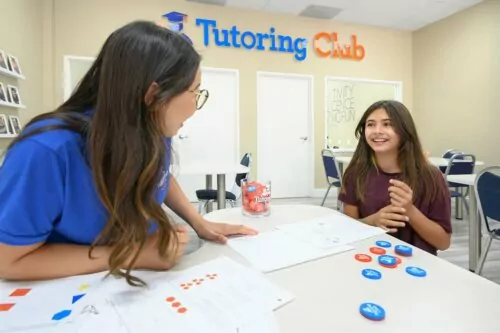
At Tutoring Club, we are dedicated to empowering K-12 students to achieve their full academic potential and build lasting confidence. For over three decades, we have provided personalized, one-on-one instruction designed to pinpoint specific learning gaps, strengthen core skills, and foster a genuine love for learning. Our mission is to transform academic challenges into opportunities for growth, ensuring every student can thrive in school and beyond.
Our approach is rooted in diagnostic assessment, which allows us to create highly individualized learning plans tailored to each student’s unique needs, pace, and learning style. We pair students with expert tutors who are not only subject matter specialists but also skilled mentors, committed to providing consistent support, positive reinforcement, and effective strategies. From foundational math and reading to advanced test preparation and executive function coaching, we cover a comprehensive range of subjects and skills.
We believe that true academic success extends beyond grades; it encompasses confidence, motivation, and the development of essential study habits. Tutoring Club partners with families to create a supportive learning environment, tracking progress diligently and celebrating every milestone. Our commitment is to equip students with the tools they need for immediate academic improvement and long-term resilience. Schedule an Assessment
What Are the Proven Long-Term Impacts of Tutoring on Student Achievement?
Research shows that high-quality tutoring, delivered consistently and guided by diagnostics, can produce months of additional learning—equivalent to accelerated progress—improving immediate test scores as well as long-term retention and course choices. Sustained tutoring that emphasizes study skills and metacognitive strategies often leads to smarter course selection, greater confidence in STEM subjects, and better preparation for advanced work. These long-term effects come from addressing root skill deficits and teaching students how to learn, not just what to learn. The final section offers concrete actions parents can take to maximize these benefits and explains how to move from observation to scheduling an assessment with Tutoring Club.
How Can Parents Support Their Child’s Tutoring Journey Effectively?
Parents get the most from tutoring by creating consistent routines, keeping daily practice short and regular, and staying in touch with the director about goals and progress. A simple checklist helps: set a weekly review time, celebrate small milestones, and provide a quiet workspace each week. Use quick conversation prompts to encourage reflection—“What did you learn today?” and “How will this help on your next test?”—so learning becomes a shared priority. If you’d like a professional assessment and a tailored plan, reach out to Tutoring Club to discuss next steps and schedule an initial evaluation.
-
Set a Weekly Review: Spend 10–15 minutes with your child going over tutor notes and celebrating progress.
-
Create a Consistent Study Time: Establish a short daily routine that complements schoolwork and tutoring assignments.
-
Communicate with the Tutor/ Director: Request brief updates and one or two actionable at-home tasks to reinforce session learning.



Comments